Kaelis. Write the bin

Bin cards are readings, not a fill and not a prescription. Open the bin disclaimer

Clip · Clip ยท Diuretic

Morning Lasix 80 mg keeps the night toilet quiet

10 min read · Reviewed

Night tablets steal the next sleep because oral furosemide starts inside an hour and keeps the bladder busy for six to eight hours. The labelled example clock is 8 a.m., with a possible second dose around 2 p.m. - not a 10 p.m. 'one last water pill'. Pair this with the electrolyte watch.

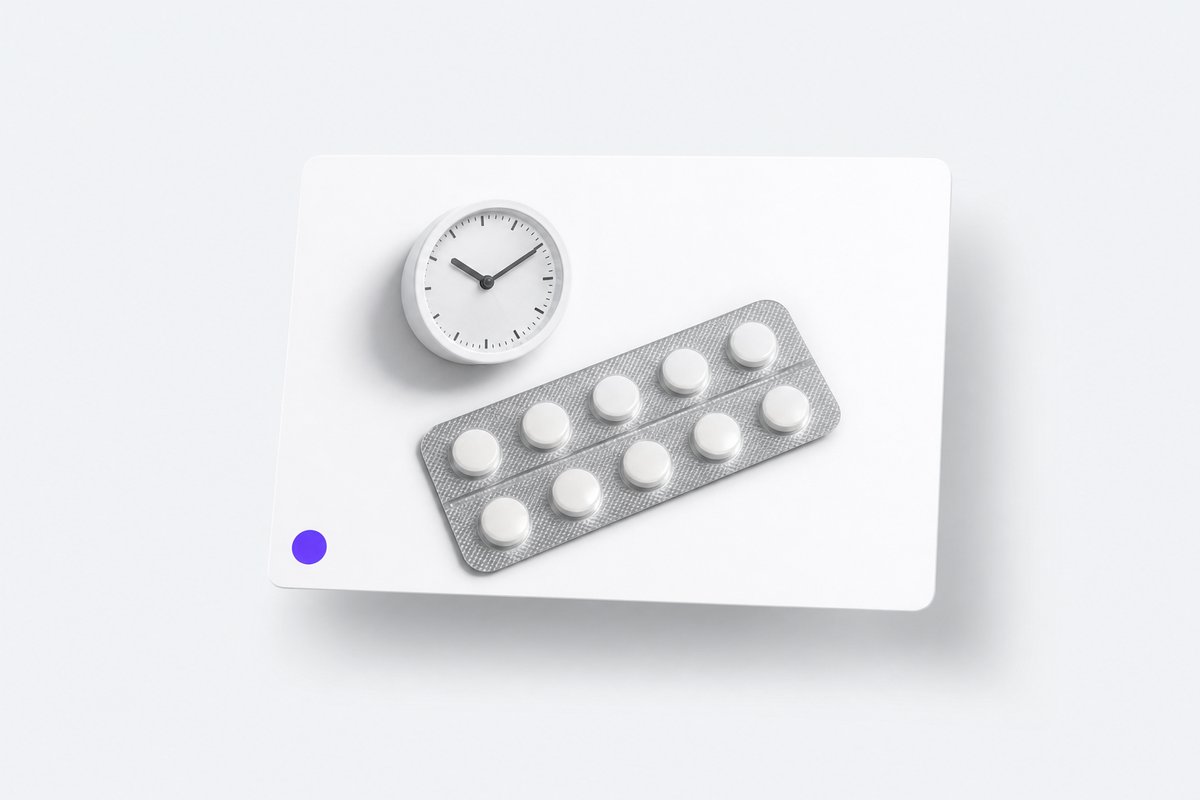
Morning clock chip with Lasix blister on clip

01Night tablets steal the next sleep

Oral furosemide turns the tap on within an hour. Peak effect lands in the first or second hour. The diuretic effect then runs six to eight hours. A 10 p.m. 80 mg tablet is a 4 a.m. corridor walk with a name on it.

People take a night dose because ankles look worse at bedtime. The swelling did not appear at 9 p.m. The tablet will not finish the job before lights-out. It will only split the night.

This bin card exists so the 80 mg morning order is read as a clock decision, not a brand slogan. Sleep debt also mimics 'the water tablet stopped working'.

02Food, tea, and the first hour

A dry swallow of 80 mg with only tea still starts diuresis inside an hour. Food does not cancel the clock. It may only delay a sensitive stomach.

People wait for 'the whoosh' and redose at 90 minutes. Peak can sit in the second hour. Waiting with a toilet plan is smarter than a second tablet in the car.

If breakfast is at 11 after a late shift, dose with that breakfast, not with a 7 a.m. alarm you ignore. The bladder follows the tablet, not the radio.

Caffeine adds its own urine. A large coffee plus 80 mg is a longer queue at the Luas stop, not a smarter heart plan.

03Weekends, lie-ins, and the drifting 80 mg

Saturday lie-ins slide the tablet to noon, then to 3 p.m., then into the film. The duration does not shrink because it is a weekend. A 3 p.m. 80 mg still works at 9 p.m.

If you sleep until eleven, dose at eleven and accept a later last toilet, or set the alarm, take the tablet, and go back to bed only if you can stand a 12 p.m. wake to pee. Many cannot.

Bank-holiday drinking plus a late tablet is a fall on a cousin's steps. Keep the loop in daylight even when the dinner is late.

Travel to a later time zone: keep home clock for the first day unless the clinician redrew it. A 8 a.m. Dublin tablet taken at 8 a.m. Boston is a night tablet.

Write missed-dose rules on the blister card: skip if the remaining day is too short for a six-to-eight-hour tail before sleep; do not double at bedtime.

Priya Natarajan will not invent a 'weekend 40 mg' as a folk split. If the chart says 80 mg once, that is the morning lock unless someone rewrites it.

04When edema fights the morning rule

Some people swell more after a salty lunch. The answer is rarely a secret third tablet at 9 p.m. It is salt, chair time, compression if prescribed, and a review of the daily total.

Giving Lasix on two to four consecutive days each week is a labelled way to mobilize edema in some adults. That pattern is a prescriber design, not a Facebook schedule.

If sleep is already wrecked by nocturia on a morning dose, look at evening fluids, prostate symptoms, and residual diuretic effect before adding a night loop. More furosemide at 10 p.m. usually makes the night worse.

Morning-bin checklist

  • Dose at the start of the long awake block
  • Keep 6 to 8 hours between labelled extra doses
  • Do not use bedtime 80 mg as ankle rescue
  • Falls at night are part of the timing harm

05The six-to-eight-hour second dose

Stacking a second 80 mg two hours later because the first 'felt quiet' ignores the onset window. The first tablet may not have peaked. The gap exists so titration is observed, not guessed in a car park.

Severe edema can be titrated carefully toward much higher daily totals, even toward 600 mg in labelled extreme states. Those charts are not home experiments. They need observation and labs, especially once the day exceeds 80 mg for a long stretch.

If the second dose must happen, put it on a clock that still ends before evening television. A 4 p.m. tablet can still leak into the first sleep cycle.

06Travel, shift work, and the toilet clock

Night-shift nurses sometimes invert the 8 a.m. example to 'start of my day'. That can be reasonable if the waking block is long and a clinician agrees. The rule is: dose at the start of the long awake period, not at the start of the sleep period.

Flights west and early hotel dinners tempt a 'just tonight' tablet. Jet lag plus a corridor you do not know is a fall risk. Keep the tablet on home daylight until the prescriber redraws the clock.

Write the clock time on the blister, not only 'morning'. Morning means nothing in a dark January in Dublin if you woke at noon.

07When the second dose is 40 mg not 80

Hypertension's usual start is 80 mg a day, often as 40 mg twice. People flatten that into one 80 mg at night 'to keep it simple'. Simple is how they do not sleep.

If the written plan is 40 mg at 8 a.m. and 40 mg at 2 p.m., do not 'combine' them after a missed morning. Take the late dose only if the six-to-eight-hour gap still lands in daylight, or skip and say so.

Edema titration can raise the single dose by 20 or 40 mg, not sooner than 6 to 8 hours. That is observation, not a lunchtime double because shoes felt tight in the shop.

Write 40 or 80 on the blister in pen. Mixed strengths in one kitchen are how evening 80 mg 'accidents' happen.

08Falls, carpets, and night lights

Night dosing wrecks more than sleep architecture. It puts a diuresing person on dark stairs. Hip notes in older Dublin patients often start with 'I was going to the loo'.

If nocturia already exists from prostate or late tea, a 10 p.m. loop is a second disease. Treat the clock first.

Keep a light on the landing for the first week of any new 80 mg morning start too. The first hour can still surprise someone who dosed at 7 and sat down at 7:20.

Orthostatic warning on the label is a timing issue as much as a salt issue. Sit, then stand, then walk. Do not sprint to a ringing phone at 2 a.m. after a rogue night tablet.

09Map the toilets before you swallow 80 mg away from home

A morning tablet on a train to Cork without a toilet plan is a dignity problem. Dose at the station after coffee, or wait until you have a corridor.

Hospital clinics that run late still owe you a toilet. Ask on arrival if you dosed at 7 and the slot is 10.

Flights: airport security plus a six-to-eight-hour tail is a reason to dose after the security queue, not in the taxi at 5 a.m.

Weddings: a 2 p.m. second dose plus a long blessing is how people leave the pew. Keep extra doses in daylight only if the venue has a toilet you can reach.

If incontinence already exists, a night 80 mg is cruelty. Morning timing is harm reduction, not a lifestyle brand.

Children in the house should know the tablet is not a sweet. The clock ink on the blister also stops a toddler guessing.

Write 'not after 3 p.m.' on the box if that is the household rule the clinician blessed. Vague 'morning' fails in January dark.

10Why 8 a.m. sits on the label

The US label's example for once- or twice-daily maintenance is 8 a.m. and 2 p.m. That pair keeps the long tail of diuresis in daylight. It is an example, not a sacred Irish hour, but the logic travels.

Usual edema starts at 20 mg to 80 mg as one dose. If more is needed, the same dose may be given 6 to 8 hours later, or the milligram may rise by 20 or 40 mg, not sooner than 6 to 8 hours after the last tablet.

Hypertension's usual initial daily total is 80 mg, often split as 40 mg twice a day. That split still wants morning and mid-afternoon, not morning and bedtime, unless a clinician has a written reason.

Daylight clocks versus a bedtime 80 mg error
Clock ideaWhat the duration does
8 a.m. 80 mgDiuresis through the working day
2 p.m. second doseStill inside labelled 6 to 8 h gap
10 p.m. 'catch-up'Toilet through the night
Two 80 mg tablets 2 h apartToo soon - labelled gap is 6 to 8 h

11Hypertension 80 mg split is not bedtime

The hypertension row uses 80 mg as a usual start, commonly 40 mg twice daily, then adjust. Adding other antihypertensives comes after response, not after a night tablet 'to help the reading'.

An evening pressure spike is a clinic question. It is not proof that furosemide belongs at 11 p.m. Night dosing for blood pressure with a six-to-eight-hour diuretic is how people fall on the landing.

If an enalapril tablet is the evening blood-pressure drug, keep the loop in daylight so two hypotensive stories do not peak in the dark.

12Write the clock on the blister

Keep 80 mg in daylight unless the person who owns your chart writes a different clock. A ruined night is a timing error more often than a 'weak batch'.

Labs and hearing still sit on the electrolyte watch. This clip only moves the hour. It does not change the milligram.

Before you start, stop, or change any medicine, speak with your prescriber or pharmacist. They hold your chart. This bin card does not. Open the bin disclaimer.

Sources

  1. DailyMed LASIX tablet - onset within 1 hour, peak in first or second hour, duration 6 to 8 hours, 8 a.m. and 2 p.m. example, 6 to 8 hour gap between dose increases.
  2. FDA LASIX label - usual initial 20 to 80 mg; hypertension often 80 mg/day divided.

Checked against the current label and reviewed by Dr. Priya Natarajan. See Pick → Check → Tag → Bin.

Bin thread

Timing mail for the Lasix 80 mg morning bin. Priya Natarajan annotates clocks; she does not rewrite your chart from a browser. Falls, chest pain, or no urine output: urgent care. [email protected] for source corrections.

Ronan P., Ringsend asks

Ankles look worse at 10 p.m. Why can't I take the 80 mg then?

Because the tablet works for six to eight hours. You will be on the landing at 3 a.m. Evening puffiness is leftover daytime salt and gravity. Move the tablet to breakfast, raise the foot of the bed if advised, and ask whether the daily total needs a planned afternoon dose - not a bedtime rescue. The furosemide shelf keeps the lab rows this clip skips.

Maeve L., Sandymount asks

Can I take a second 80 mg at 10 a.m. if 8 a.m. felt weak?

The labelled gap is six to eight hours, and the first dose may not have peaked until the second hour. Two hours later is too soon. Call the prescriber rather than stacking. If they want a second dose, 2 p.m. is the example clock, not mid-morning panic.

Night nurse, St Vincent's asks

I finish at 8 a.m. and sleep at 9 a.m. Where does my tablet go?

Dose at the start of your long awake block after the clinician agrees. For you that may be early evening, not civic 8 a.m. The harm is dosing at the start of sleep. Write the actual clock on the blister so cover staff do not 'correct' you to breakfast.

Tomas G., Inchicore asks

GP wrote 80 mg for blood pressure. Split or once?

The hypertension line often starts at 80 mg daily, commonly 40 mg twice a day. Once-daily 80 mg is used for edema more than as a default pressure split. Do not invent the split yourself. If you already faint on standing, say so before anyone adds an evening loop.

Shift driver, Swords asks

I drive at 5 a.m. Is a 4 a.m. tablet smarter?

A 4 a.m. tablet peaks while you are on the M1. Diuresis plus a dark cab is a bad pair. Dose after the run or at a stable breakfast hour your prescriber picks. Urgency to urinate is a safety issue, not a minor inconvenience.

Ciara N., Rathgar asks

I already wake twice to pee on a morning dose. Add a night tablet?

Adding night furosemide usually adds a third wake. Look at evening drinks, prostate symptoms, and whether a late second dose is leaking into sleep. Bring a 48-hour toilet log to clinic. Do not self-add 80 mg at 10 p.m.

Registrar, Beaumont asks

One-line counselling for the discharge sheet?

Take 80 mg at the start of the waking day; expect diuresis for 6 to 8 hours; do not take a bedtime catch-up; wait 6 to 8 hours if a second labelled dose is prescribed. Attach this clip. Point electrolytes to the watch clip.

Una F., Clontarf seafront asks

I walk the promenade at 7 a.m. Dose before or after?

Dose after you are near a toilet you trust, or accept that the first hour may interrupt the walk. Do not dose at 10 p.m. to 'keep the morning free'. A public promenade plus peak diuresis is a dignity problem. Some people dose at 6 a.m. at home, walk at 9. That is a clock, not a new milligram.

Occupational health, Dublin Bus asks

Driver on 80 mg. Any timing I should put in the file?

Dose at the start of the off-duty awake block so the six-to-eight-hour window is not in the cab. Urgency to urinate is a safety issue. If edema control forces a work-hour dose, the clinician and employer need a written plan. This clip does not clear someone for a route.

Carer, Finglas asks

Mum sleeps at 8 p.m. We forget the morning tablet until 4 p.m. Give it then?

Four p.m. still leaks into her 8 p.m. sleep. Skip and resume the next morning unless a clinician said otherwise, and set a breakfast alarm. A late 80 mg is how night falls start. If mornings are always missed, ask for a blister-pack time and a home-help prompt, not a bedtime rescue.